Showing posts with label gay Catholics. Show all posts

Wednesday, 15 February 2012

"A Catholic Case for Same-sex Marriage": Gramick, DeBernardo

This month in Maryland and the state of Washington, an extraordinary dynamic is playing itself out:  Two Catholic governors are prodding legislators to pass bills legalizing same-gender marriage. Like Govs. Andrew Cuomo in New York and Pat Quinn in Illinois — whose states recently legalized same-sex civil unions — Govs. Martin O’Malley and Christine Gregoire are acting against the strongly expressed opposition of their church’s bishops.

As Catholics who are involved in lesbian and gay ministry and outreach, we are aware that many people, some of them Catholics, believe that Catholics cannot faithfully disobey the public policies of the church’s hierarchy. But this is not the case.

The Catholic Church is not a democracy, but neither is it a dictatorship. Ideally, our bishops should strive to proclaim the sensus fidelium , the faith as it is understood by the whole church. At the moment, however, the bishops and the majority of the church are at odds. A survey published in September by the Public Religion Research Institute found that 52 percent of Catholics support marriage equality and 69 percent support civil unions.

Those numbers shouldn’t surprise people who are familiar with the Catholic theological tradition. For example, Catholic thinking dictates that we should use the evidence we find in the natural world to help us reach our conclusions. Many Catholics have reflected on the scientific evidence that homosexuality is a natural variant in human sexuality, and understand that lesbian and gay love is as natural as heterosexual love.

 -full reflection at  The Washington Post.

Enhanced by Zemanta

Monday, 19 December 2011

"All we want for Christmas.....": Filipino Message to the Bishops.

In terms of sheer numbers, the Philippines is a major Catholic country one that doesn't often make the headlines in the Catholic press elsewhere, except at Easter (when many Catholics re-enact the Passion by volunteering to be crucified themselves).
Perhaps progressive Catholics should pay more attention. Filipinos have demonstrated remarkable imagination in finding ways t0 protest the actions of their politically powerful, conservative bishops. A few years ago, a group of women protested the bishops' active campaign against the government's proposed reproductive rights bill, by delivering to the bishops' conference, colourful baskets of blown up condoms. (My favourite placard carried the message "Bless our reproductive rights").
Now, in this advent season, a group of LGBT Catholics went carolling for the bishops - with significantly altered words.


LGBTs go caroling at CBCP to protest 'discrimination' 

Members of the lesbian, gay, bisexual and transgender (LGBT) community on Thursday went caroling in front of the Catholic Bishops’ Conference of the Philippines (CBCP) headquarters in Manila to press for their rights against discrimination.
The protesters, led by political organization “Ang Ladlad,” trooped in front of the CBCP office in Intramuros clad in red and green, with some even wearing Santa hats, and carrying a banner which says “All We Want For Christmas is our Human Rights.”
LGBT members also sang Christmas carols such as “Pasko Na Naman” and “Jingle Bells” with edited lyrics to focus on human rights.
The protesters, for example, sang “All We Want for Christmas is our Human Rights” instead of the usual “All I Want for Christmas is My Two Front Teeth,” an original composition by Don Gardner.

More information comes from the Philippine LGBT Hate Crimes Watch:

"We sing our carols not only for bishops and senators, but also we want the Filipino people to fill our socks and our hearts with blessings of equality by approving the inclusion of sexual orientation and gender identity, or SOGI, in the Senate Bill (SB) 2814 or the Anti-Ethnic, Racial or Religious Discrimination and Profiling Act of 2011," Bemz Benedito, Ladlad chairwoman, told the press.
The CBCP came out recently against the bill claiming that SOGI is a personal choice of LGBTs and do not need legal safeguards. The bishops have also traditionally maintained in the nine years that pro-gay bills have tried to pass in Congress that equality bills will lead to same-sex marriage.

LGBT groups however countered that SOGI is a deeply ingrained attribute and that many homosexuals and transgenders suffer lifelong violations of human rights from a bigoted majority, prompting them to campaign for legislative action.

The activists took turns singing medleys of traditional Filipino and English tunes rewritten with witty lyrics that sounded out their demands. Jingle Bells was rewritten this way:
We want you to know, that lesbians and gays
Transgenders and bi's, have equal human rights
Don't discriminate, we need more love, not hate
All we want for Christmas is our equal human rights!
(Chorus)
Human rights, human rights, we want human rights!
Lesbian, gay, transgender, bi have equal human rights!


Comment at New Ways Ministry Bondings, where I first came across this story, notes:
Anger over the bishops’ conference position was inflamed when it was reported that a lawyer for the conference, Jo Imbong,  said that LGBT people  “should not be protected from discrimination”  because they had the power to choose their sexual orientation.
It sounds like the Filipino bishops are having the same problem that the U.S. bishops had recently when their adviser on marriage issues, Daniel Avila, suggested in a column in a Catholic newspaper that homosexuality was caused by the devil.  Under pressure, Mr. Avila resigned.
Let’s hope and pray that Jo Imbong either resigns or is dismissed.
Enhanced by Zemanta

“O Come, ALL Ye Faithful”: Church of the Assumption and Saint Gregory. | Queering the Church

"Last Saturday evening, I joined with others from London’s Soho Masses for a Christmas Carol Service at the Church of the Assumption and Saint Gregory, Warwick Street, followed by a great Christmas Party. The closing hymn, the always popular “Adeste Fideles” (which we sang, to my disappointment, in English) was particularly suitable for the occasion.  It was written by John Wade, a choirmaster at that very church, where it was also first performed. As we sang, I began to reflect on just how appropriate it is that the regular Soho Masses for London’s LGBT Catholics take place in this particular church.


The history of the parish goes back to 1724, a time when Roman Catholics were unable to worship openly in England, but as a chapel of the Portuguese Embassy (and later the Bavarian Embassy), the church had diplomatic privilege, and offered a place of refuge from persecution for London’s Catholics. Later, the building was attacked and damaged in the anti-Catholic Gordon riots, but survived and was duly restored.

For LGBT London Catholics of today who feel, rightly or wrongly, that they are prevented by their sexuality or gender identity from worshipping openly in other Catholic parishes, this church once again is a place of refuge. However, we continue to suffer “attack”, in the form of prayers levelled against us from across the street, by people opposed to our worship. Like the building itself, we will survive these attacks, and come through in the end, revitalized.

The name is also significant, combining two superficially unrelated patrons, both redolent of promise for those persecuted by the Church. “Saint Gregory” is the great papal reformer. As such, his name on the church where we meet may be taken as a symbol of the hope for reform of Catholic teaching on sexual ethics and pastoral approaches to sexual minorites which must surely come, and of which glimpses have been seen in recent years – not least, right here in the diocese of Westminster. Then there’s Our Lady of the Assumption, a particularly powerful symbol for me, as a South African.

Read more, at "Queering the Church"


Friday, 18 November 2011

New York’s gay Irish keep mass attendance alive | Irish News | IrishCentral

"The legalization of gay marriage in New York last June reignited the age-old struggle between faith and sexuality in the Catholic community. While figureheads such as Archbishop Timothy Dolan promote an increasingly conservative outlook on homosexuality in Catholicism, a small group of mostly Irish-American Catholics continues to provide a weekly place of worship for all, regardless of sexual orientation. 


“We are Catholics in exile,“ joked Brendan Fay, 50, an active member of the organization Dignity, a Catholic non-profit organization for homosexual and trans-gender persons."
“Most people are surprised that LGBT people care about being Catholic at all,” said Fay, “probably because Irish-American Catholics often get stereotyped as conservative.”

Each Sunday evening, roughly 100 Dignity members transform the Episcopal Church St John in Greenwich Village into an unusual Catholic sanctuary.

Eight openly gay priests volunteer to rotate through Dignity’s weekly mass, and once every month or so, a female pastor delivers the sermon. Last Sunday, a congregation of 60 joined the Rev. Jim Morris, an Irish-American priest, in singing the inaugural hymn “Halleluja”.

From: IrishCentral 


'via Blog this'

Saturday, 12 November 2011

Catholic Bishops, Gay Marriage: "the Outer Fringes of Crazy Town"

Catholic mothers, like all others, delight in their offsprings' weddings - and those of other family members. They are not alone. Weddings are the occasions of major family gatherings, where we gather to celebrate with them, cement the family bonds and interrelationships that have been set up by earlier weddings when we catch up with news from those members we only see at weddings and funerals, and lubricate the family bonding with suitable refreshments, music and dance.

Such celebrations apply to all couples, opposite-sex or same-sex. A few months ago, a colleague told me that his son was preparing for a civil partnership with his then boyfriend - and my friend gave me a regular running commentary of the hoops his wife and son were making him jump through in the wedding preparations, from early visits to (gay) wedding shows and expos, to choosing the outfits, to planning the "wedding" reception. When my niece married her wife on a Cape Town beach a few years ago, my staunchly Catholic mother and the rest of the family gathered from across the country to celebrate with her, just as they regularly do for all family weddings.

All this is to do far, far more than simply "congratulate" the new spouses. Yet in New York, a report at Unicorn Booty claims that Archbishop Timothy Dolan has "forbidden" Catholics from even congratulating gay or lesbian newly-weds:


But then the decree takes a sharp right turn and steers right off a cliff into Even Crazier Town, the affluent suburb to the north of Crazy Town proper’s city limits.

Dolan, on behalf of the Catholic Church, forbids Catholics from even being happy for their newly married gay friends or offering congratulations. Failure to comply with this perversion of law from their all-knowing, all-loving god that hates some of the things he lovingly created in his own image will result in canonical sanctions – a fancy way of saying priest court.

Oh, and stay the F away from Catholic churches, homos.

- Unicorn Booty

Now, the writer of this has himself veered off into Crazy Town - there is not a word in the decree to prevent Catholics from congratulating or celebrating with lesbian or gay newly weds, just a ban on doing it on Church property, or by Church personnel. One of the tragic features of (some) bishops' crazed, irrational overreaction to gay marriage, has been the crazed, irrational overreaction to the Catholic Church from (some) secular gay activists.

There is, however, good reason nevertheless to conclude that Catholic bishops' reactions to gay marriage, in the US and in Scotland, have taken them to the outer fringes of crazy town - but not for the reasons  given by Kevin Farrell at Unicorn Booty.

Saturday, 5 November 2011

A Silver Lining to Avila’s Nonsense on “Satanic” Origins of Same-sex Orientation.

The extraordinary fiasco over comments by an advisor to the US bishops' anti-gay-marriage initiative would be the stuff of high comedy, if it were not so tragic. (Indeed, much of the commentary from the secular LGBT blogosphere has been hilarity at the nonsensical nature of his claim that homosexual orientation has a Satanic origin).

Thursday, 28 April 2011

What Gay Catholics Have Done: Vito Russo

You may not be immediately familiar with his name, but if you've ever browsed the gay shelves of a decent bookshop, you've almost certainly seen it, and his title "The Celluloid Closet: Homosexuality in the Movies".  At The Cutting Edge,  Douglas Ireland has a tribute and review of a recent biography by Michael Schiavi," Celluloid Activist: The Life and Times of Vito Russo".

I am not a particularly great enthusiast for classic movies, and have never been moved to buy the Russo's book, but I was interested in the account of how he emerged from a working class, Italian Catholic background to a life as a prominent gay activist.

Monday, 13 September 2010

James Alison: Discovery of "Gay" = Good News For the Church

Wherever the Catholic sun does shine, there's love and laughter and red red wine

at least I've always found it so.  Benedicamus Domino*
– Hillaire Belloc.
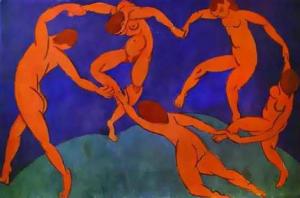
Matisse Dancers

Not many people today would readily associate the above words with the modern Catholic Church, especially not lesbian gay, transgendered and other sexual minorities – i.e. in the eyes of the church, most of us.  But James Alison is one who clearly would agree with the sentiment.  In a fascinating and stimulating new article, James argues that thee “discovery” in recent decades of homosexuality as an orientation, part of the natural order of things rather than a lifestyle choice or pathology, should rightly be seen as Good News for heterosexuals and for the Catholic Church as a  whole.  For lesbigaytrans Catholics, this is likewise obviously good news – but it is much more.  It is an opportunity, he argues exuberantly, for fun and delight in the Church.
What I would like to share with you is a sense of fun. I think being Catholic is huge fun. A huge roller-coaster ride into reality propelled by God, borne up on safe wings, gestated by the loving self-giving of Our Lord in his crucifixion, watched and smiled over by his Holy Mother, played into being like a virtuoso first performance of an unknown masterpiece by the adventurous coaxing of God’s Holy Spirit.

And right now one of the best places from where we can get a rich sense of how much fun this adventure is, is by looking at matters gay and their incidence in the life of the Church.


james-alison

This will be a novel and unexpected perspective for most of us, so used to seeing (and experiencing) our position in the Church in terms of accusations, lack of welcome or even outright rejection, often leading us to question our own inner selves.  This will be a hard sell for James, we think reading these introductory words, but James Alison is on his familiar ground of “delight”, and well up to the task.  In his previous writing, he has frequently emphasised the joy and delight of being catholic, and of being gay as well as Catholic.  Part of the key in retaining that joy, he believes, is to avoid the trap of responding to the Church opposition to us with an antagonistic relationship to the hiearchy.  Rather, he argued, it is healthier to approach the Church with an attitude of Ignatian indifference (an attitude I now aspire to of, but cannot always achieve) .  In this article, he expands on what others, notably John McNeill, have described as an emerging Kairos moment in the church, here thinking specifically of an impending transformation of the theology of sexuality, with gay sexuality at the centre.  (Kairos Moment:  from the Greek for a "an appropriate time, an opportune moment.")

First, though he needs to prepare the way by establishing a frame of reference, and an analogy.

The frame of reference he applies is the "discovery" of sexual orientation as innate and natural.
So, to my first point. In the last fifty years or so we have undergone a genuine human discovery of the sort that we, the human race, don’t make all that often. A genuine anthropological discovery: one that is not a matter of fashion, or wishful thinking; not the result of a decline in morals or a collapse of family values. We now know something objectively true about humans that we didn’t know before: that there is a regularly occurring, non-pathological minority variant in the human condition, independent of culture, habitat, religion, education, or customs, which we currently call “being gay”. This minority variant is not, of course, lived in a way that is independent of culture, habitat, religion, education and customs. It is lived, as is every other human reality, in an entirely culture-laden way, which is one of the reasons why it has in the past been so easy to mistake it as merely a function of culture, psychology, religion or morality: something to get worked up about rather than something that is just there.

The analogy he draws is with the impact on human consciousness following the discovery of America at the end of the 15th century, and specifically the impact on map making.
And a richer example still: just think of the hugeness of what happened when Europeans made landfall in the Americas in the late fifteenth century. The sheer vastness, otherness, of what they had stumbled across by mistake, while looking for a fast trade route to China and Japan, would take decades, even centuries, to sink in. Every single feature of the way Europeans saw themselves underwent a radical shift of perspective in the light of the geological, anthropological, botanical, zoological and cultural “thereness” of something that had of course “always” been there, but of which Europeans had previously had no knowledge at all. But that shift of perspective didn’t happen immediately.
So why is this Good News, and for whom?

Well, first of all, obviously, for us as lesbian and gay people.  Recognising that we are an entirely “natural” part of creation, albeit a minority part, frees us from any sense of guilt or shame at being who we are.  We are clearly part of god’s creation, just as God intended us to be.  An important  corollary follows:
Each person finds their good by adherence to God’s plan for them, in order to realise it fully: in this plan, each one finds their truth, and through adherence to this truth, becomes free (cf John 8,22). To defend the truth, to articulate it with humility and conviction, and to bear witness to it in life are therefore exacting and indispensable forms of charity.”
Following this train of thought, the above words logically lead to the conclusion that gay people have not just a right to defend themselves, but an obligation to come out, to bear witness to their truth and to articulate it.  These are positions I have frequently publicised and argued here on QTC.  So which radical gay or lesbian theologian produced those words?  Benedict XVI himself, in the recent encyclical “Caritas in Veritate”.  Of course,  in writing them, he wasn’t thinking specifically of the dreaded “homosexuals”, but that is precisely the point.

In the years immediately following Columbus’ voyage, it took a while for the knowledge of this new world to sink into consciousness, and for people to begin to understand the implications.  Alison is arguing here that at the time of writing the infamous Hallowe’en letter on the “fundamentally disordered” nature of a homosexual orientation, the understanding of the discoveries by scientists and anthropologists had not yet sunk it.  The church at that time was still working with maps that had not yet been redrawn accurately to show the full extent of the discovery.  As it becomes better understood, as the maps improve, the number of people who benefit will expand.  After the LGBT community itself, the next to benefit will be their families, but later also all straights.
Again, the discovery is rather obviously good news for the parents and families of those who are gay and lesbian, since it means that the false guilt trips which have been laid on them can be shrugged off……………..


We are only now beginning to be able to tell what are some of the knock-on effects of having discovered that what we call being “straight” or “heterosexual” is not the normative human condition, but a majority human condition. ……And this has important consequences for understanding the relation between the emotional, the sexual, and the reproductive lives of those who are heterosexual. If there are some humans in whom, as a normal and non-pathological minority variant, the emotional and the sexual elements of their lives are not linked to any possible reproductive element, then the link between the possible reproductive element and the emotional and sexual element in those in whom these elements are linked is of a somewhat different sort than was previously imagined. We are talking about something within the sphere of the free, the intentional and the deliberate rather than the mechanical and the fated. The relationship between that which is simply “biological” and that which is available to be humanised has changed.
Alison argues from this that the “discovery of gay” thus creates circumstances of greater freedom for the straights as well as for the rest of us, by offering more choices, and removing the fear of being considered “gay”. Bit the really interesting and exciting part is where he goes on to spell out the implications for the church as a whole, and for gay Catholics in particular.
Where I would like to take this further is in the really very interesting field of how this is affecting, and going to affect, the Church. So, let’s look at the alterations in the map of the world which the discovery is producing.


There was a time, in the not too distant past, when loud voices from Rome, along with their local amplifiers, would tell people like us that the only acceptable form of discussion about, or pastoral work with, gay and lesbian people was one that was strictly in accordance with the truth, and that truth was properly set forth in the teaching of the Roman Congregations. This truth, as it turned out, was that “although the homosexual inclination is not itself a sin, it constitutes a more or less strong tendency towards behaviour which is intrinsically evil, and thus the inclination itself must be considered objectively disordered”


But curiously, the very Church whose apparent “truth” in this area I’ve just recited for you, teaches very strongly ……that there is such a thing as something that is true independently of the perspective and wish list of any of us, and that that truth in some sense imposes itself on us. In other words, the same authorities who told us that we have to go along with their understanding of the homosexual inclination because it is true, are also, thank heaven, insisting that the truth doesn’t depend on them, and that they and their teaching are receptive to that which is discovered to be objectively true in whatever field it should emerge.
And the objective truth that is emerging is the discovery that homosexuality is in every sense natural, and not disordered at all.   By its own logic and teaching, the Church will have to redraw its maps of human sexuality to take account of this discovery.
Well, what has emerged with ever-greater clarity over the last twenty or so years is that the claim underlying the teaching of the Roman Congregations in this sphere is not true. It is not true that all humans are intrinsically heterosexual, and that those who appear not to be heterosexual are in fact defective heterosexuals. There is no longer any reputable scientific evidence of any sort: psychological, biological, genetic, medical, neurological – to back up the claim. The discovery that I talked about earlier, backed with abundant evidence, is that there is a small but regular proportion of human beings – somewhere between three and four percent - across all cultures who are hardwired to be principally attracted to members of their own sex. Furthermore there is no pathology of any psychological or physiological sort that is invariably associated with this sort of hardwiring. It is not a vice or a sickness. It is simply a regularly occurring minority variant in the human species.
In developing this new map, those responsible for drawing it will have to take account of one rather surprising phenomenon.  It is not simply the case, says Alison, that the official teaching on same gender relationships is flawed: rather, he claims:
It is properly speaking true to say that, appearances aside, the Catholic Church has no teaching at all about homosexuality.
This is because up to now, the theologians have not been writing about homosexuality as it is now known to be, but as something that previously existed primarily in their imaginations, based only on distorted reports – rather as medieval Europeans might have interpreted reports of a large, four egged mammal with a horn as a mythological unicorn, not as a rhinoceros.  This creates for us the opportunity to develop from the ground up, an entire new body of theology.
So here is a splendid, splendid opportunity for us to be able to say “yippee”! “Just in time”! Just as it was becoming clear that the whole way of talking about being human which has sustained official Church teaching for much of the time between the apostolic period and now is in deep trouble, here at last we have an objective fulcrum from which to be working out what it is to be Catholic. ......We find ourselves facing up to the fact that we have discovered something objectively true about being human which is going to re-write our maps.


Now, I would say the fun lies in the challenge to discover Catholicity from within this process of learning, which is as it should be. ......We can relax into the discovery that God did something very big a long time ago, and is continuing to do exactly that thing, and that we are surfing the very big waves which are continuing to flow out from this in hugely creative ways.
But in doing so, we must resist the temptation to do it in opposition to the church, in argumentative or squabbling fashion.
Here we are dealing with something that is true independently of the positions and the authority of those speaking. Which means: its truth doesn’t depend on us, so we needn’t be in rivalry about it. And there is something marvellously freeing about this.


Now if we look at these officials not as people with whom we must be in rivalry, but as people who have a difficult job to do in the face of emerging truth, we can also learn to be much more sympathetic to them, without going along with their falsehoods………There is quite genuinely no firm tradition of Catholic discussion or teaching about human love and partnering other than that which is derived from the presupposition of universal heterosexuality and the goodness of marriage.


This is where we all come in. .....This seems to me to be the challenge for us now, and as I say continually, it seems to me to be a fun challenge: are we going to dare to be Catholics, not in rivalry with our office holders, grateful that they’re there, aware that they’re pretty stuck, but delighted to be beginning to take on board the contours of the new discovery about being human that goes with the term “gay”? Are we going to allow ourselves to be empowered to discover ways in which God is much more for us than we had imagined, that God really does want us to be free and to be happy, and to rejoice in what is true as we are stretched toward and stand alongside the weakest and most vulnerable of our sisters and brothers wherever we may find them? Are we going to allow ourselves to discover the potential for Catholicity that is opening up alongside the discovery of the new richness in Creation that shimmers within the little word “gay”?
Conclusions

What this is saying, is clear in its implications for gay and lesbian Catholics:
  • Catholic tradition, and Benedict XVI in particular, insists on reason as a complement to faith.
  • Reason dictates that the Church must and will recognise the implications of the "recent" discovery that sexual orientation is innate, natural and not remotely disordered.
  • This will force a corresponding recognition that we, all of us together, need to create a brand new theology of sexuality. This will represent Good News for all in the Church, gay and straight alike.
  • We have the opportunity at this critical point in history, this Kairos moment, to participate in this exciting, even fun-filled, adventure.
Read the full text at  The Fulcrum of Discovery: how the "gay thing" is good news for the Catholic Church (Footnote: Years before I became involved with Jesuit thinking and Ignatian spirituality, back as a first year student in 1970 at the University of Cape Town, I developed a soft spot for the several Dominicans I met through the Catholic student chaplaincies at SA universities. This admiration grew further in later years as I began to learn of the sterling work done by Dominicans of the calibre of Albert Nolan in adapting Liberation Theology to the South African context.     So I was delighted to see that one of the occasions for presenting a version of this paper was a conference at the Dominican Priory in Pietermaritzburg, South Africa. ) Further Reading: James Alison Website Brokeheart Mountain: Reflections on monotheism, idolatry and the Kingdom Letter to a young, gay Catholic. See also:  Mary Hunt on Dignity at 40: Faithful & Fabulous
James Alison's  Books:
Faith Beyond Resentment: Fragments Catholic and Gay On Being Liked Undergoing God: Dispatches from the Scene of a Break-in Broken Hearts and New Creations: Intimations of a Great Reversal (Forthcoming) Although we as gay Catholics know Alison primarily as a gay theologian, he describes himself as a theologian, who happens to write from a gay male perspective. He also writes more general theology - and we too need to read outside the box (or closet? ) of sexuality: Raising Abel: The Recovery of Eschatological Imagination The Joy of Being Wrong

Sunday, 8 August 2010

Gay Masses: Soho, San Francisco.

Earlier this week, California Catholic Daily carried a piece on San Francisco Pride, and the decision by the Church of the Most Holy Redeemer not to participate. However, the parish did advertise in the Pride pocket guide:
I completely fail to see why a Catholic paper should object to the proclamation of God's love, but they and their readers were enraged by this. The immediate  trigger was the fact that the publication also included the usual gay ads, like a prominent back page one for a gay hook-up site. Is anyone surprised that some gay men use dating sites? However, it was clear that the real anger was directed at the simple existence of a Mass catering primarily to an out queer community.  I placed a comment - the first in the thread - and for my pains, had a response which suggested that I might be in league with some demon:
Terence Weldon appears on other sites as a rabid perverter of Holy Scripture. If he's in league with some demon, then it's a particularly depraved one.
(Relax, it's not true.) What I found remarkable about the rest of the comments was their complete and utter lack of any thought or understanding, a simple parroting of clichés about the sin of Sodom, and the Sin that Cries Out to Heaven and the like: confirming once again, my firm conviction that what draws a certain type of Catholic to the Church is a simple desire to avoid any need for hard thinking on ethical choices, merely depending on following a rule book and the formulaic repetition of fixed prayers for "Salvation", or for "favours" to be granted. This form of religion (it hardly counts as faith) is not that far removed from belief in magic.
Yesterday, a similar piece (but without any specific trigger) suddenly appeared in the Catholic Herald, lamenting "The  Scandal of the Soho Masses ".  Here too, the responses were sad, sharing much of the tone of those at CCD.  This was my intitial response (I will place more later):
The Catholic Church equally teaches that contraception and cohabitation are grave sins. Why  not write about the countless Catholics who ignore those rules? Or about the priests who as confessors or spiritual directors will privately approve those decisions, when taken in good conscience?
The simple facts are that nobody has any business judging the interior state of another's conscience, and that the history of the Masses has shown that they have drawn back to the Church many hundreds of people who had not seen the inside of a Catholic church in decades. Frequently, they come initially out of simple curiosity after hearing of us by word of mouth , or at London Gay Pride, but then return more regularly. Often, they then become more actively involved in a local parish closer to home as well.
One of the impressive features of the Masses is the depth of participation we have. I suspect that as a proportion of the total congregation, the numbers actively participating as special ministers, musicians, and in the increasing range of after-mass or outside activities is higher than in many conventional parishes. This is in spite of the very long distances some of us travel to attend, and the an often heavy involvement of some in home parishes. Discussion with our parishioners also demonstrates that the level of knowledge and interest in theology and church far exceeds what I have generally encountered in other parish settings.
The only scandal around these Masses is not that they exist, but that some bigots appear to believe they are doing the Lord's work by trying to prevent other Catholics attending Mass. I am proud to have been associated with these Masses for the past six years, and hope I will continue to be for many more,.
The Catholic Church equally teaches that contraception and cohabitation are grave sins. Why  not write about the countless Catholics who ignore those rules? Or about the priests who as confessors or spiritual directors will privately approve those decisions, when taken in good conscience? The simple facts are that no body has any business judging the interior state of another's conscience, and that the history of the Masses has shown that they have drawn back to the Church many hundreds of people who had not seen the inside of a Catholic church in decades. Frequently, they come initially out of simple curiosity after hearing of us by word of mouth , or at London Gay Pride, but then return more regularly. Often, they then become more actively involved in a local parish closer to home as well. One of the impressive features of the Masses is the depth of participation we have. I suspect that as a proportion of the total congregation, the numbers actively participating as special ministers, musicians, and in the increasing range of after-mass or outside activities is higher than in many conventional parishes. This is in spite of the very long distances some of us travel to attend, and the an often heavy involvement of some in home parishes. Discussion with our parishioners also demonstrates that the level of knowledge and interest in theology and church far exceeds what I have generally encountered in other parish settings. The only scandal around these Masses is not that they exist, but that some bigots appear to believe they are doing the Lord's work by trying to prevent other Catholics attending Mass. I am proud to have been associated with these Masses for the past six years, and hope I will continue to be for many more.
Reflecting on this afterwards, I was struck by another feature of the comments thread: several people wrote of how they personally had been told directly by participants at the Masses that they were themselves sexually active. Huh? How did this come about? I hardly think that this is something that people would freely volunteer to a stranger at first meeting. In six years of attendance, I have never once had anybody volunteer information on their sexual relationships. The only way these people could have acquired this information, said to have been supplied by "several" people, is to have asked direct questions.
This is extraordinary. I would no more dream of questioning visitors to the Masses on their sexual views and activities than I would I would question married couples in suburban parishes on their use of contraception, or young unmarried couples if their relationships were sexual, or adolescent boys if they jerked off, or single men if they ever used porn.
Why, oh why, do these people think that their sexual  practices are strictly private matters, but our lives as openly gay, lesbian or trans are open to public scrutiny and dissection?
As I have noted in comments at both these publications, the only scandal of these "gay masses" is not they exist, but that some Catholics seem to believe they are somehow doing the Lord's work by trying to prevent others from attending Mass. Now that really is a scandal that cries out to heaven for vengeance.
For a completely different, celebratory take on the importance of participating in gay worship, see these words of Rev Andy Braunston of the MCC , taken from "The Church" in  "Religion Is a Queer Thing" edited by Elizabeth Stuart.  (I carry a more extended extract in my companion post today, "Women-Church, Queer - Church, and House-Slaves.")
The sad thing is that queer people are leaving churches in their millions. We don't want to play by those rules any more. So what choices do we have? Many of us have adopted the ideas of Schussler Fiorenza  and created our own religious communities: queer-church. These take on many forms, from the world wide queer denominations (the Metropolitan Community Church), through to support and campaigning groups like the LGCM in Britain, Dignity and Integrity ans so forth in the USA.  There are also independent groups that function as churches in everything but name. The thing that unites us is the feeling that we are making the rules for ourselves.
We have many choices as queer Christians. we can see ourselves as house-slaves, who are just like any other Christians really, not wanting to cause a fuss or disturb anyone.  This strategy might work for a time, but will, I fear lead to frustration, as these terms will never be affirming or life-enhancing. Or we can let ourselves go on the exodus that God calls many of us to. ..There are dangers with the exodus - we might lose our way, we might get tired and want to want to go back.  There is a danger that whilst we have left Egypt, Egypt has not left us, and we might succeed only in creating carbon copies of what we have left behind - but the danger is worth it.
[ad#In post banner]